
Menu
Home repairs & services
THE ROOMS THAT WORK HARDEST
Handyman in Ashford
An unfinished repair list often begins in the room that does the hardest work. A utility cupboard has lost its grip, a bathroom fitting moves when touched and the back door needs lifting before it closes. For an Ashford home, My Handyman can help organise that list around practical outcomes: what must work again, which fittings you already have and what requires a separate trade. Describe the difficulty rather than deciding the repair in advance. That leaves room to identify a sound solution before more parts are ordered.
Handyman labour prices in Ashford
For utility-room storage and the fittings used most often in Ashford, discuss the scope first and then compare these planned-time examples.
These daytime rates apply within the M25. For an address outside the M25, request a location-specific quote before using these figures as a budget.
| Time allowed | Monday–Saturday labour | Sunday labour |
|---|---|---|
| 1 hour | £83 | £99 |
| 1.5 hours | £119 | £143 |
| 2.5 hours | £191 | £231 |
| 3 hours | £227 | £275 |
| 4 hours | £299 | £363 |
One-hour minimum: £83 Monday–Saturday or £99 Sunday. Further timed work is charged in 30-minute periods (£36 Monday–Saturday; £44 Sunday). These are labour-budget examples, not fixed quotations or promised completion times for particular tasks.
Pre-booked blocks are separate options: four hours £260 Monday–Friday or £256 Saturday; eight hours £460 Monday–Friday. Confirm availability and the appropriate option before booking.
Prices include taxes. Materials, collection and parking/access costs are separate where applicable. Electrical, gas and other specialist work needs a separate quote. See full prices and booking conditions, then confirm the work and final total by phone.
Make the everyday cupboards reliable again
This service page concerns Ashford in Spelthorne, TW15. Spelthorne Council's Design Code describes Ashford as predominantly low-rise detached and semi-detached housing, much of it dating from 1885 to 1960, alongside more recent apartment development. That mix makes the actual construction more useful than a general assumption about the town. This is not the Ashford in Kent. Your own property may have very different access and construction from another home in the same town. Tell us if the work is in a house, an individual flat or a shared building, and which fittings belong to you. This is useful information for planning the visit rather than a reason to assume a standard repair.
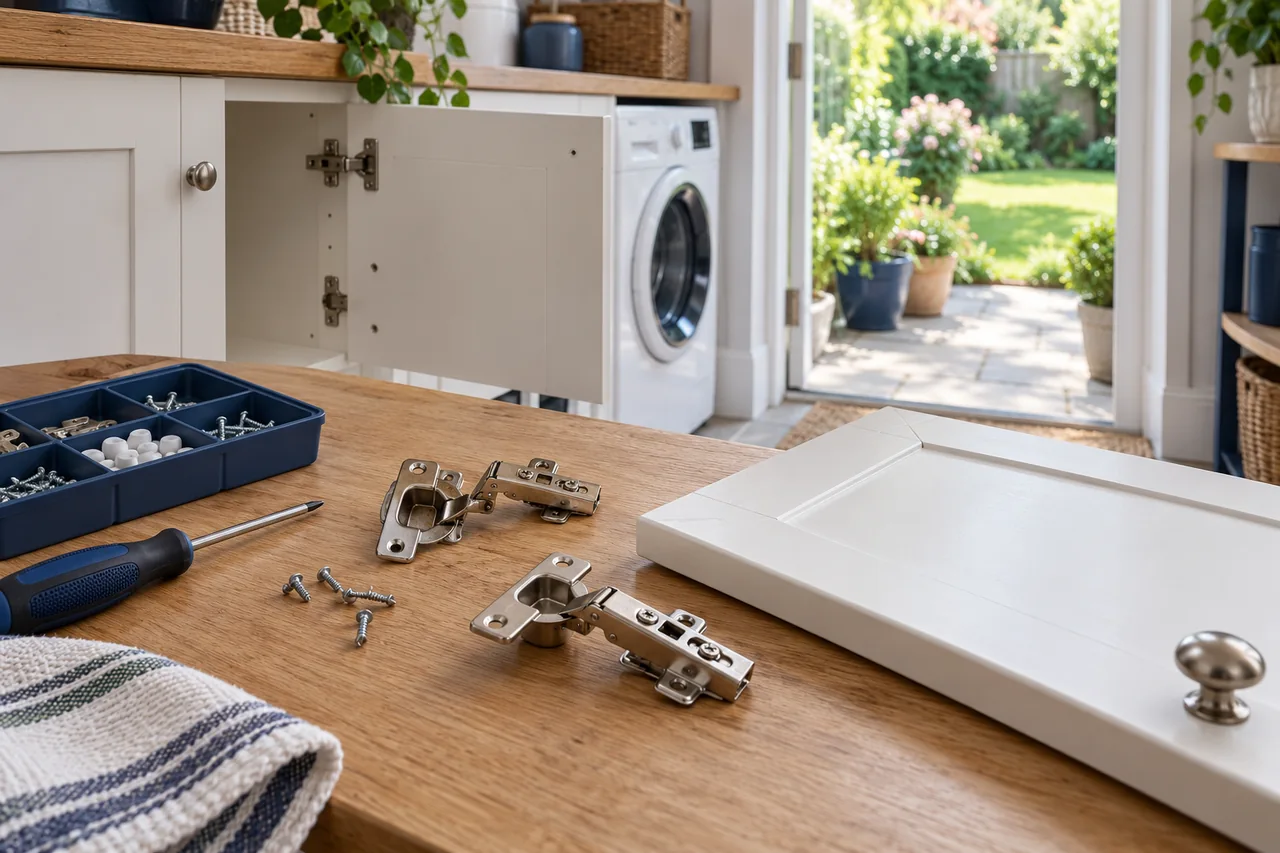
A sagging utility-room door is a good example. Screws may have loosened, the hinge may be worn or the board carrying it may have broken down. Household handyman repairs can cover suitable adjustments and fittings after the condition is understood. Photograph the hinge both open and closed, include the cabinet edge and say if the movement developed gradually. Keep any detached screws. Repeatedly tightening into damaged board can enlarge the problem, so describe earlier attempts as well as the current symptom.
Where a shelf has split or a panel needs replacing, carpentry provides a route for discussing the timber component itself. A utility cupboard also has pipes, valves and appliances competing for space. Measure the usable opening, not just the door front, and say which controls must remain accessible. Odd jobs and furniture assembly may sit alongside that work if you have a freestanding storage unit to build. Retain its instructions and all supplied wall restraints; assembling the box and securing it safely are separate considerations.

Keep water problems separate from the storage repair
A damp patch beneath a cupboard can change the order of the whole list. Take the stored contents out if this can be done safely and describe when water appears. Is it linked to using a tap, running an appliance or a period of rainfall? Plumbing repairs concern the water connections and fittings, while drainage services address problems such as repeated backing-up or slow discharge. A wet cupboard does not establish which investigation is needed. Mention other affected fixtures rather than offering a guessed diagnosis.
For a bathroom, distinguish a loose fitting from a wider change to the room. Bathroom refurbishment can bring layout, plumbing, preparation and installation into a planned sequence. Keep details of any concealed fittings that you want to retain. If the immediate issue is a cracked edge or detached tile, tiling work needs the surrounding base considered too. A replacement finish should not conceal unresolved movement or moisture. Photograph the whole junction and retain a spare tile if available, including any packaging that identifies its size and range.
The desired end point matters here. Restoring use of a basin is different from renewing the surrounding wall and replacing a cabinet. State which outcome is essential and which can wait. If a room has the home's only washing facilities, include that in the enquiry so any interruption can be discussed. Do not remove serviceable fittings simply to prepare for a visit unless the removal has been agreed. A clear working area is helpful; creating an exposed or unusable installation in advance usually is not.

| Item on an Ashford household list | Useful evidence before arranging work |
|---|---|
| Utility cabinet with a dropping door | Open hinge view, condition of the board and any previous screw repairs. |
| Water beneath a stored appliance | When it appears, nearby connections and other fixtures affected. |
| Fresh finish around repaired storage | Chosen boundary, retained paint details and areas to protect. |
| Replacement cooking appliance | Model reference, opening measurements and current connection information. |
| Door that closes only when lifted | Whole door photograph, hinge condition and whether the key still operates. |
Prepare surfaces before spending on a fresh finish
Utility rooms and hallways can carry old screw holes, damaged corners and marks from earlier leaks. Plastering and making good should be scoped around the actual surface condition. Explain if the material feels loose or if a crack has changed. A small visible mark can need investigation before a cosmetic repair is sensible. Decide whether the work is to preserve an otherwise sound surface or prepare a larger area, and keep photographs from before any recent covering was added.
For painting and decorating, set a visible boundary: a complete wall, the cupboard interior or the adjoining woodwork. A dab of retained paint may look different beside a finish that has aged. State the product details if known and identify surfaces that must be protected. Completing hinges, shelves and other disruptive fittings before finishing usually makes the sequence easier to manage. Include drying stages in the discussion rather than assuming every part of a room update can be completed during one continuous attendance.
External symptoms also deserve their own description. Roofing and guttering enquiries benefit from photographs taken safely from ground level and a note of when dripping or staining occurs. Do not climb to identify the fault. Describe the affected elevation and any access restrictions you know about. A water mark inside is evidence to report, not proof that a particular gutter joint has failed. External access equipment and weather-dependent work should be discussed within that scope, rather than counted as an incidental indoor task.

Route appliance and comfort work to the right enquiry
A kitchen list might include a broken handle, an appliance change and an inconvenient light position. Send those as separate items even when they share the same cupboard. Kitchen and cooker installation needs the model, dimensions and existing connection arrangement. Electrical services cover the electrical assessment and alterations appropriate to that installation. A supplied appliance fitting inside an opening does not demonstrate that its electrical requirements suit the existing supply. Keep the manufacturer's installation information available.
For a boiler concern, contact gas boiler services with the appliance identification and observed symptoms. Gas work needs an appropriately registered engineer; it should not be absorbed into a general cupboard adjustment. Heating services are relevant to radiator performance and controls, with the system details included where known. Note which rooms are affected and whether the issue follows a change in settings. These observations make an enquiry more useful without asking you to remove covers or attempt a technical diagnosis.
Entrance hardware completes the practical picture. If a key turns but the door needs pushing hard, explain that combination to the locksmith service. A lock mechanism, hinges and frame alignment can produce different symptoms. Identify whether it is your private door or a shared entrance and confirm who can authorise work. Any designated fire door needs its relevant specification respected. Buying a visually similar latch first may leave you with an unsuitable component, so preserve existing markings and seek agreement before ordering.
Turn several symptoms into one usable brief
Write the list room by room, then mark its priorities. For example, the cupboard repair may need to precede repainting, while assembling a small unit could be possible independently. Put uncertain tasks in their own group so an unresolved part does not obscure work that is ready to discuss. Explain which materials you own, where they are stored and whether their condition has been checked. Product photographs, a clear view of the whole fitting and a close view of its problem are usually more informative than a long message saying everything is loose.
Provide the complete Ashford address, floor level and route from the entrance. If tools must pass through a furnished room, explain any narrow turn or delicate surface. For flats, ask the responsible building contact about arrangements affecting access, deliveries or work. Public parking and a private space are different matters; check the relevant permission for the actual appointment rather than assuming a usual household parking arrangement covers a visiting vehicle. Availability and the final work scope are agreed through the enquiry, without a promised arrival time inferred from the area name.
Costs reflect labour, required components, preparation, access and the agreed finish. The home page planner can help structure a time allowance, but it cannot inspect the cabinet board or establish which specialist a symptom needs. Discuss what happens if a hidden defect changes the plan and who can approve additional work. Keep a short completion list as well: doors operating as agreed, any removed parts accounted for and the intended next stage recorded. That makes a modest visit easier to judge and a larger improvement easier to continue.
Sorting out the utility-room list
Is this the Ashford service page for TW15?
Yes. This page concerns Ashford in Spelthorne. Give the full property address when enquiring so access and the requested work can be discussed for the correct home.
Should I empty a utility cupboard before sending photographs?
Move ordinary stored items if safe, but leave connected equipment and unknown fittings alone. Include a photograph showing the cupboard as a whole before a close view of the affected part.
Can damaged hinge holes be assessed without replacing the whole cupboard?
Describe the board condition and previous repairs first. A local repair or replacement component may be worth discussing, but the photographs cannot guarantee that the surrounding material is sound enough to retain.
What should I record about a cupboard that gets wet only occasionally?
Note the time, which appliance or fixture was in use and whether rainfall coincided. These observations help separate plumbing, drainage and external-water enquiries without assuming the cause.
Do I need to choose all the new paint before arranging repairs?
You can begin with the condition and intended finish boundary. Final paint selection belongs with the preparation and decorating plan, particularly if the surface must first dry or be repaired.
How can I keep an appliance replacement from delaying smaller repairs?
List its model and connection questions separately from hardware and assembly tasks. Ask which work is ready to arrange and which needs more information, parts or a different trade before a date is settled.
Building information for this enquiry
Check the area for another property
Bring the awkward everyday jobs into view.
Tell us which cupboard, fitting or appliance is causing trouble. Include photographs, product details and the outcome that matters most.