
Menu
Home repairs & services
LONDON HOMES · MATERIALS & DETAIL
Tiling Services London
The tile you see is only the top layer. A lasting finish also depends on the surface beneath it, the adhesive, the joints and how water is managed. My Handyman offers wall and floor tiling and tile repairs in London, including ceramic, porcelain and natural stone finishes. Start with the room, the area to cover and the condition of the existing surface. We can then discuss the work before you commit to materials.

Choosing tiles for the way a room is used
A kitchen splashback has different demands from a shower wall or a busy hallway floor. Check that the tile is suitable for its intended location, rather than choosing on appearance alone. Porcelain can be dense and demanding to cut; natural stone can have variations that are part of the material. The tile manufacturer's guidance matters for adhesive, preparation, sealing and maintenance. Large-format tiles also need a sufficiently flat base and a practical route into the property.
Think about the pattern, joint width, edge trims and where cut pieces will fall. A layout centred on a basin may look different from one centred on the wall. In an older room, ceilings and corners can be out of square, so there may be a choice about where to absorb that variation. Keep a spare supply from the same batch for later repairs. Agree an allowance for cuts and breakages before ordering, based on the actual layout rather than a guessed percentage.

The surface beneath the finish
Loose tiles, hollow areas, crumbling plaster and movement need investigation before new tiles go on. Tiling over a weak surface does not make it strong. The preparation might involve removing an old finish, repairing a base or using a suitable board or levelling product. Discuss those possibilities during the assessment, including what may only become visible after removal. If wall repairs are substantial, plastering may need to be coordinated with the tiling specification.
Wet areas require a complete approach to water management. Tiles and grout alone should not be assumed to provide the waterproofing a shower needs. Junctions, penetrations, the shower tray and any tanking system must work together. If a leak has already reached an adjoining wall or ceiling, identify its source and allow the affected structure to be assessed. Replacing the visible grout without dealing with a failed seal or moving tray can leave the original fault in place.

| Location | Decisions before ordering |
|---|---|
| Kitchen splashback | Finished height, socket cuts and edge trim. |
| Shower walls | Substrate, waterproofing junctions and screen fixings. |
| Hallway floor | Tile suitability, base level and door clearance. |
| Local repair | Matching spare, surrounding bond and underlying damage. |
Replacement, regrouting or a new tiled area?
A cracked tile can sometimes be replaced individually, provided the surrounding area is sound and a matching spare exists. Removing it can disturb adjacent tiles or the underlying waterproofing, which needs to be considered before work starts. If several tiles are moving, the fault may extend beyond the visible cracks. Keep photographs of the pattern and any spare packaging. Even an identical product name may look different if the original batch is no longer available.
Grout and flexible sealant do different jobs. A discoloured joint is not always a failed joint, and cleaning may be enough where the material is intact. Missing grout, recurring cracks or a split seal around a bath need a closer look. Ask what will be removed and replaced, how neighbouring surfaces will be protected and when the area can be used again. Product curing times take priority over the desire to return a shower to service immediately.
Planning the fitting around the rest of the room
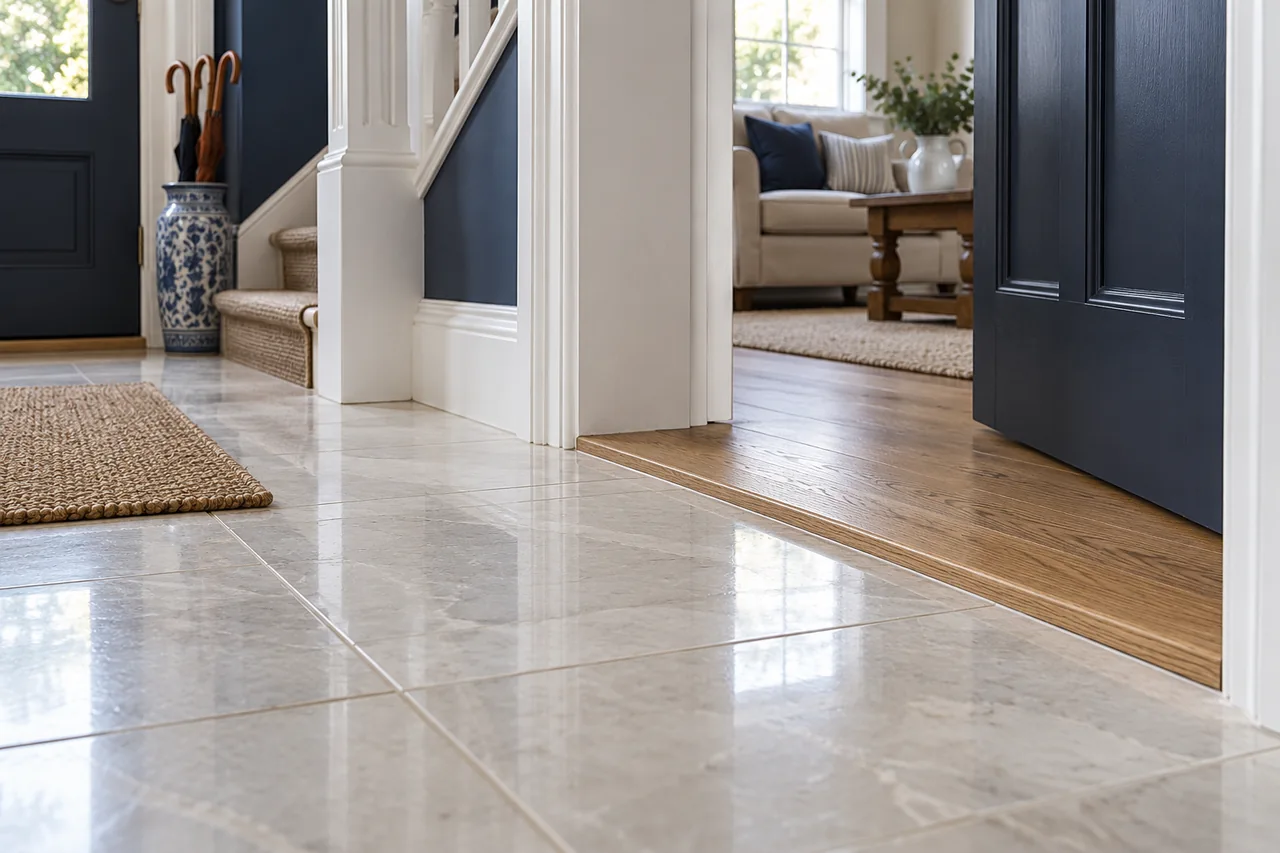
For a splashback, agree the finished height, position of sockets and relationship to the worktop. For a floor, check door clearance and the transition to adjoining rooms. Underfloor heating, where present, adds requirements for compatible materials and the heating manufacturer's commissioning instructions. Do not switch it on to accelerate drying. The size of the tiled area is only part of the job: many cuts, niches, narrow returns and awkward access can take disproportionate time.
In a bathroom project, tile setting-out should be discussed alongside the fittings. A basin or shower screen fixed later can affect where holes and edges should sit. Bathroom refurbishment is the appropriate route when the work extends to a coordinated room change. If taps or waste connections also need attention, include plumbing in the brief. Avoid finishing the tiles first and discovering that concealed pipework still needs opening up.
Cost, preparation and looking after the result
Tile size, material, substrate condition, removal, pattern and access all affect the price. Ask whether adhesive, grout, trims, preparation products, rubbish removal and sealing are included. Natural stone polishing or specialist restoration should be discussed separately rather than assumed to fall within routine fitting. Before the appointment, empty the room as far as practical, identify water and electrical restrictions and arrange a clear route for materials. Keep the chosen tile and grout references together.
After installation, follow the specified wait before walking on a floor, wetting a shower or applying a cleaning product. Start with the care instructions for the actual tile and grout, particularly for stone that may react badly to acidic cleaners. Keep spare tiles flat and labelled with their batch details. Inspect flexible joints occasionally, and report movement or repeated cracking rather than repeatedly covering the symptom. A useful handover explains both what has been fitted and how to care for it.
Questions about tiling services
Details worth agreeing for tiling services.
Can new tiles go over existing tiles?
Sometimes a sound, suitable surface can be prepared for that approach, but loose areas, extra weight and finished levels must be assessed. Door clearances and wet-area details can rule it out. It is not an automatic shortcut.
Why do the same grout cracks keep returning?
Repeated cracking can indicate movement or an unsuitable joint detail. New grout will not necessarily stop it. Explain where the crack appears and whether the tiles or nearby fittings move so the cause can be considered.
Do you work with porcelain and stone?
Porcelain and natural stone tiling can be discussed for the proposed room. Give the exact product, size and intended location when enquiring. Cutting, lifting, sealing and adhesive requirements differ, so the specification needs checking before the work is priced.
Can just one damaged tile be changed?
It may be possible if there is a matching spare and the neighbouring tiles and base are sound. Removal carries some risk to adjacent finishes. Agree the extent of the repair and what happens if hidden damage is found.
How soon can I use the shower afterwards?
That depends on the adhesive, grout, sealant and waterproofing products used. Ask for the actual curing instructions at handover. A dry-looking surface is not proof that the installation is ready for water exposure.
Should the tiles be bought before the quotation?
Choose a product or shortlist, but confirm the layout and quantity before ordering. Tile dimensions, pattern and cutting requirements affect labour and waste. Check availability of matching trims and additional stock before the appointment is arranged.
Discuss tiling services.
Call with your postcode, the work you have in mind and any product or access details.