
Menu
Home repairs & services
LONDON HOMES · REPAIR & INVESTIGATION
Plumbing Services London
Water under the sink, a tap that will not stop dripping or a toilet that keeps filling all need a clear description before the right repair can be planned. My Handyman's plumbing service covers repairs and installations in London. Tell us where the water appears, which fitting is affected and whether you can safely isolate it. A symptom is a starting point; the source still needs to be established.
| What you notice | Information to give |
|---|---|
| Water below a sink | Whether it appears with supply, use or draining. |
| Toilet continually filling | Cistern type and access to the mechanism. |
| Several slow fittings | Which outlets are affected and when it began. |
| Replacement basin | Product dimensions, taps, waste and fixing details. |
A leak is not always where the stain appears
Water can travel along a pipe, cabinet panel or ceiling before it becomes visible. Note when the leak occurs: continually, only when a tap runs or after an appliance drains. A photograph of the surrounding area can be more useful than an extreme close-up of one drop. If water is actively escaping, stop using the affected fitting and isolate the supply only if you know how to do so safely. Keep clear of wet electrical equipment.
A repair may involve a joint, valve, seal or damaged section of pipe, but it should not be chosen from the appearance of a stain alone. Explain previous work, concealed connections and access panels. Cabinets, tiled boxing and fitted furniture can make reaching the fault a separate part of the job. Agree how access will be gained and what making good will involve. A leaking bathroom fitting may overlap with a broader bathroom refurbishment if surrounding finishes are already damaged.

Taps, toilets and the fittings used every day
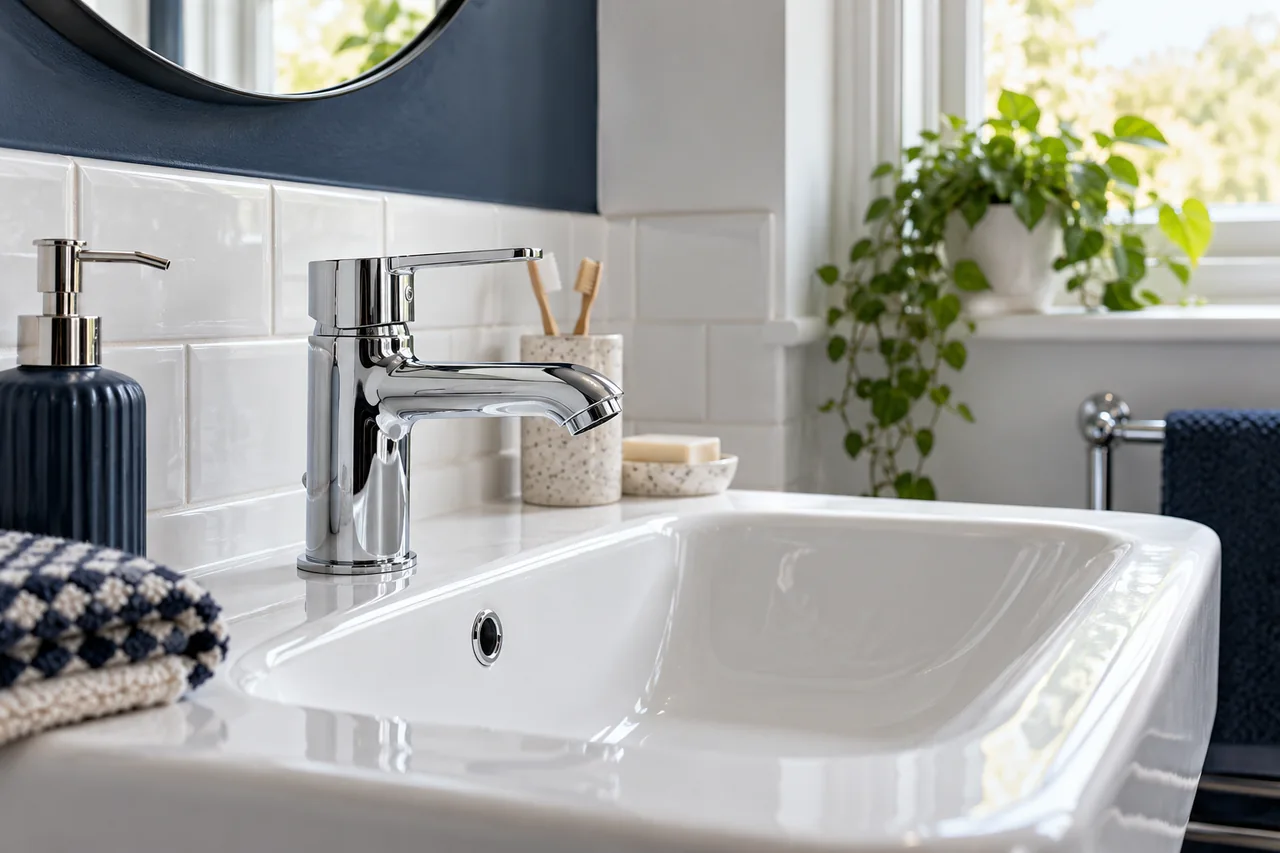
For a dripping tap, give the make or a clear description of the control arrangement. Replacing a cartridge or washer depends on the fitting and availability of compatible parts. An old seized fitting may be harder to dismantle than expected, and a replacement tap still needs to suit the basin holes and water system. Do not buy a visually similar part without checking its specification. Retain packaging and product details for any replacement you supply.
Toilet faults can involve the inlet valve, flushing mechanism, seals or waste connection. Describe whether water runs into the pan, escapes around the base or appears only during flushing. Concealed cisterns need access to the mechanism; mention the flush plate and any service opening. A loose pan or moving basin should be assessed before sealing around it. Sealant can close a joint, but it does not correct a fitting that is inadequately supported or a connection that is leaking behind it.
Slow wastes and repeat blockages
A single slow basin can be a local waste problem, while several affected fittings may indicate a blockage farther along the system. Mention gurgling, smells and whether neighbouring properties have similar trouble. Stop using fittings that are backing up. Tell the plumber if you have used a chemical product, including its name, so the work can be approached appropriately. Do not mix cleaning chemicals or keep adding them to standing water.
Waste pipe connections and traps form part of everyday plumbing, but outside drains and repeated downstream blockages may need drainage investigation. Clearing a symptom and identifying why it returns are different scopes of work. Ask what the initial visit covers and whether further investigation would be quoted separately. Pipework hidden below floors or behind tiled walls may need access work before the condition can be established. Agree the next step before an exploratory opening becomes a larger repair.

Replacing a fixture or planning an installation
For a basin, sink or toilet replacement, provide the product dimensions and connection positions. A new fitting may not cover the same footprint as the old one. Check whether taps, waste fittings, brackets and valves are supplied in the box; photographs on a retailer's page can show accessories that are sold separately. Moving a fitting introduces more questions about pipe routes, drainage falls and the surrounding structure than replacing it in the same position.
A kitchen appliance connection should be coordinated with the kitchen and cooker installation brief. Explain the appliance model, available water and waste points and any cabinet restrictions. Gas appliances and gas boiler work require the appropriately qualified gas engineer and are not general plumbing repairs. For a boiler fault, use the gas boiler service enquiry route and identify the appliance. Do not open a boiler casing to investigate a leak yourself.
Before arrival, during the repair and afterwards
Clear the cupboard or working space and keep pets and children away from the affected area. Locate any known stop tap and tell us if it is seized or inaccessible. In flats, water isolation may involve communal arrangements or a managing agent. Mention those restrictions before a visit is booked. If a ceiling below is affected, explain access to both properties and who can authorise work. An available parking space can matter when tools or larger fittings need to be carried in.
The quotation should distinguish diagnosis, labour, parts, access and making good. A simple visible connection and a concealed pipe leak cannot sensibly have the same assumed price. Ask how additional work will be approved if the first inspection reveals more damage. Once repaired, the relevant connections should be checked in use, and any instructions for drying or monitoring explained. Keep the details of replacement components for future servicing. Call 020 3078 5925 with the fault and postcode to discuss the appropriate next step.
Questions about plumbing services
Details worth agreeing for plumbing services.
Is a dripping tap always a washer problem?
No. Mixer cartridges, ceramic mechanisms, damaged seats and supply conditions can produce similar symptoms. The tap type and inspection determine the repair. Keep the manufacturer's details if available rather than assuming a universal washer will fit.
Can you repair a pipe inside a tiled wall?
The source and practical access need establishing first. Opening the wall may be necessary, and matching tiles or decoration may be separate work. Agree the access and making-good scope before destructive investigation starts.
Should I keep using a slow sink?
If water is backing up or leaking, stop using it and explain the symptoms. Continuing to run water can spread the problem. Mention any drain cleaner already used so it can be taken into account during assessment.
Do I need to arrange water shut-off in a flat?
Check how the supply is isolated and whether communal access or permission is needed. A plumber needs to know if the isolation valve serves other homes. Arrange the responsible building contact before work that may interrupt the supply.
Can I provide my own replacement tap?
Yes, discuss compatibility and what is supplied before purchasing it. The tap must suit the mounting holes and water system, and additional connectors or valves may be required. Keep the receipt and fitting instructions available.
Does the repair include damaged decoration?
Confirm that separately. Stopping a leak, drying the affected area and restoring plaster, paint or cabinetry are distinct tasks. The drying condition and extent of damage may only become clear after the plumbing fault is resolved.
Discuss plumbing services.
Call with your postcode, the work you have in mind and any product or access details.