
Menu
Home repairs & services
LONDON HOMES · MATERIALS & DETAIL
Roofing and Guttering London
A damp mark upstairs may be linked to the roof, but it does not identify the entry point. Water can travel before it reaches a ceiling. My Handyman's roofing and guttering service covers inspection, repair, replacement and rainwater-system enquiries in London. Explain what you can observe safely from indoors or ground level, when it happens and any earlier work. Access and the actual roof condition need assessment before a remedy is proposed.

Separate the visible symptom from the cause
Record whether water appears during wind-driven rain, prolonged wet weather or whenever it rains. A date and a photograph of the whole affected area can help show change. Roof coverings, flashings, junctions and rainwater goods can all be relevant, but a stain alone cannot select the repair. Mention recent storms, nearby works and any known damage. Avoid entering a loft with unsafe access or walking under an unstable ceiling to investigate.
If water is near electrical fittings, keep clear and explain the situation when seeking help. A routine roofing appointment is not a substitute for dealing with immediate danger. Do not climb onto a roof or reach from a ladder to get a better photograph. Ground-level views, indoor symptoms and existing reports are enough to start the conversation. A proper inspection should establish the next step and explain any areas that cannot yet be assessed.
Roof coverings and junctions need specific repairs
Roofing enquiries can cover tiled, slate and flat roof work. These coverings differ in their construction and repair requirements. A missing tile, damaged flashing and failed flat roof detail should not receive an identical treatment. Ask what defect has been identified and how the proposed repair addresses it. Local repair may be appropriate where the surrounding construction is sound; widespread deterioration can require a broader proposal and clearer information about the existing build-up.
Junctions around chimneys, walls, valleys and roof openings deserve attention because water management depends on the details. A patch applied without understanding the route of water may not last. If a replacement is proposed, ask what layers, edges and associated work are included. Discuss material matching, ventilation and any permissions that may apply to the building. Ask which parts of the roof were assessed and what remains outside the findings.

| Observation | Assessment question |
|---|---|
| Water near a chimney | Which junction or covering is allowing entry? |
| Gutter overflow | Debris, alignment, outlet or downstream restriction? |
| Missing roof tile | Condition of adjacent covering and safe access? |
| Repeated internal stain | Has the entry source been resolved and checked? |
Gutters should collect and discharge water properly
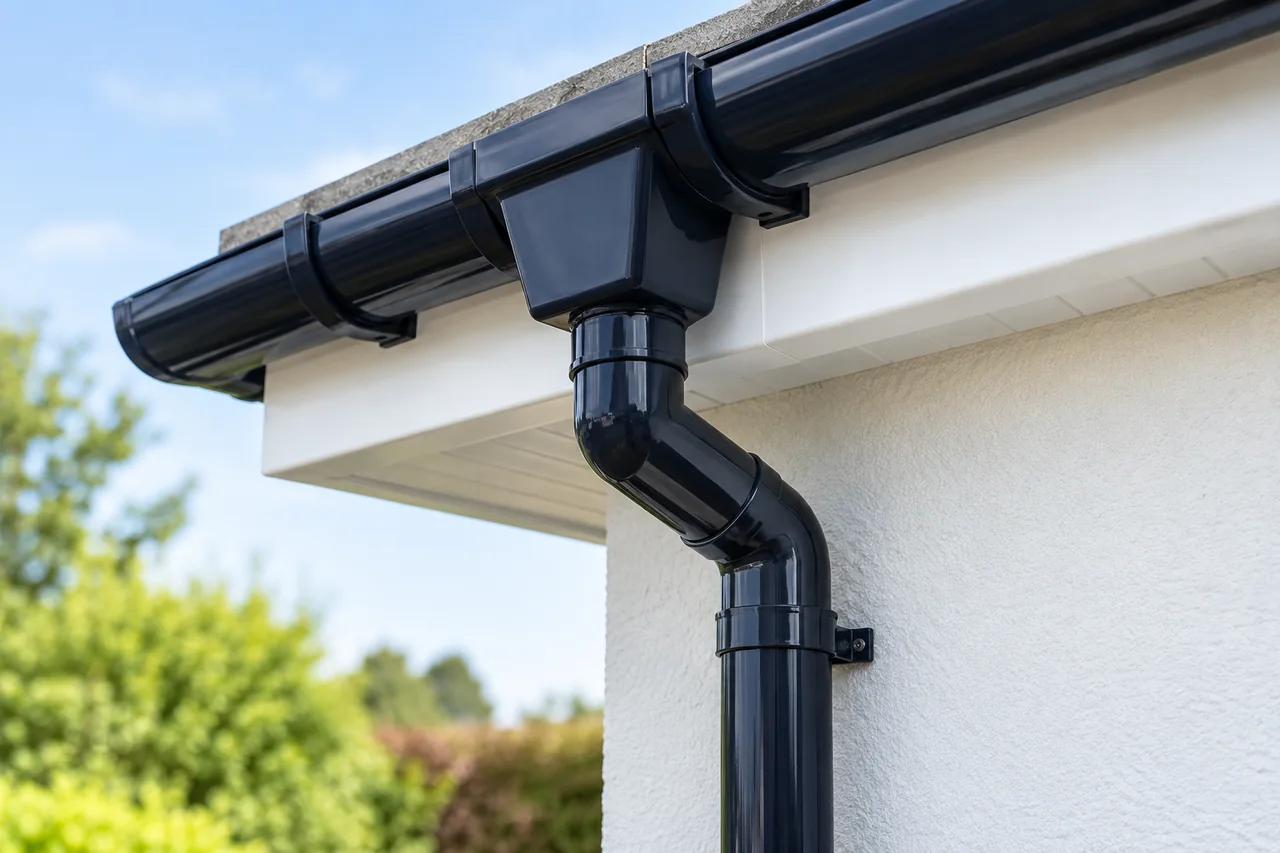
An overflowing gutter may contain debris, have a damaged joint or fall incorrectly towards an outlet. The downpipe or connected drain can also be restricted. Describe where water spills and whether the problem affects one section or the whole run. Gutter cleaning, joint repair and replacement are different jobs. An inspection should establish whether clearing alone is sufficient or whether the fixing, alignment or material needs attention.
Check the whole rainwater route rather than stopping at the eaves. Water discharging against a wall can contribute to repeated wetting even if the roof covering is intact. If the issue is farther downstream, coordinate drainage services. Tell us about conservatories, extensions and fragile surfaces below the gutter that affect access. A section that appears close to an upstairs window may still need equipment and a planned working method rather than an improvised reach.

Access is part of the job, not an afterthought
Roof height, slope, ground conditions and obstructions determine how the work can be approached. Scaffolding, suitable platforms or other arrangements may be needed after assessment. The price and programme should account for that access. Explain narrow side passages, communal gardens, overhead services and restrictions on placing equipment. In leasehold or shared buildings, establish who authorises the work and whether neighbouring access or management approval is required.
Weather can affect safe access and the application of repair materials. A sensible programme allows for conditions rather than guaranteeing work on a particular day regardless of rain or wind. Ask what temporary measures, if any, are appropriate while permanent work is planned, and what limitations they have. Do not assume an emergency enquiry means immediate attendance is available. Call to discuss the situation and current arrangements with clear information about the condition and access.
Agree evidence, making good and future checks
A quotation should describe the identified defect, materials, access, removal, disposal and the boundary of repair. Ask how hidden deterioration would be handled and whether photographs or other findings can be provided where practical. For a larger replacement, compare the complete scope rather than only the headline total. Internal ceiling repairs and plastering should follow resolution of the water entry and any necessary drying, not conceal a continuing problem.
When the building is ready, arrange painting and decorating as separate making good if required. Keep repair records and note any repeat symptoms after rain. Routine checks can be made from a safe position; do not turn maintenance into a reason to climb. Call 020 3078 5925 with your postcode, property type and observations to discuss roofing or guttering work. Keep material references and the agreed scope with the work record, so any later maintenance enquiry can refer to the same details.
Questions about roofing and guttering
Details worth agreeing for roofing and guttering.
Does a ceiling stain prove the roof is leaking?
It may indicate water entry, but plumbing, condensation and other causes also need consideration. Record when it appears and its location. Investigation should establish the source before either roof repair or internal decoration is chosen.
Can gutters be cleaned from any ladder?
Access must be suitable for the height, ground and work involved. Obstructions and fragile surfaces can change the approach. Do not assume a domestic ladder provides an acceptable method simply because the gutter is visible.
Should all gutters be replaced if one joint leaks?
Not necessarily. The condition, alignment and compatibility of the existing system need checking. A local repair may suit a sound run, while brittle or widely failing sections can justify a broader replacement proposal.
Can a flat roof always be patched?
The construction, extent of damage and surrounding condition determine that. Ask how the repair joins the existing covering and what limitations remain. A patch should not be presented as a universal answer to widespread deterioration.
Is interior ceiling repair included?
Confirm it in the quotation. Stopping water entry, allowing drying and restoring plaster and paint are separate stages. The internal damage may need reassessment once the source has been dealt with and the area is stable.
What can I prepare without climbing?
Provide ground-level photographs, indoor observations, previous reports and access details. Clear movable items from a safe working area if appropriate. Leave roof access, gutter inspection and any work at height to the planned professional arrangement.
Discuss roofing and guttering.
Call with your postcode, the work you have in mind and any product or access details.