
Menu
Home repairs & services
LONDON HOMES · THE PRACTICAL LIST
Handyman Repairs London
A cupboard hangs crooked, a door catches or a fitting has come away from the wall. Describe the item, how its operation has changed and what you want to retain. My Handyman handles household repair enquiries in London, with specialist problems directed to the appropriate trade. The surrounding material, available parts and intended use help define the repair. Call with the fault, postcode and priority rather than a guessed diagnosis.

Describe what changed and what still works
A useful repair enquiry explains the behaviour of the item. Tell us where a door rubs, how a handle moves or which fixing has loosened. Note whether the problem appeared after impact, water damage or gradual wear. Include the material and approximate size. A photograph of the whole item and its surroundings helps show the context; a close-up can then show the fault. You do not need to dismantle anything or take risks to prepare that information.
The cause matters because a visible repair may not be enough. Tightening a screw into damaged timber or refitting a bracket to a weak surface can leave the same problem. Explain previous repairs and keep any detached pieces. An assessment should establish whether the original item remains suitable, whether parts are available and what can realistically be restored. Structural movement, serious decay or specialist equipment can change the scope beyond a straightforward household repair.
Doors, cupboards and everyday fittings
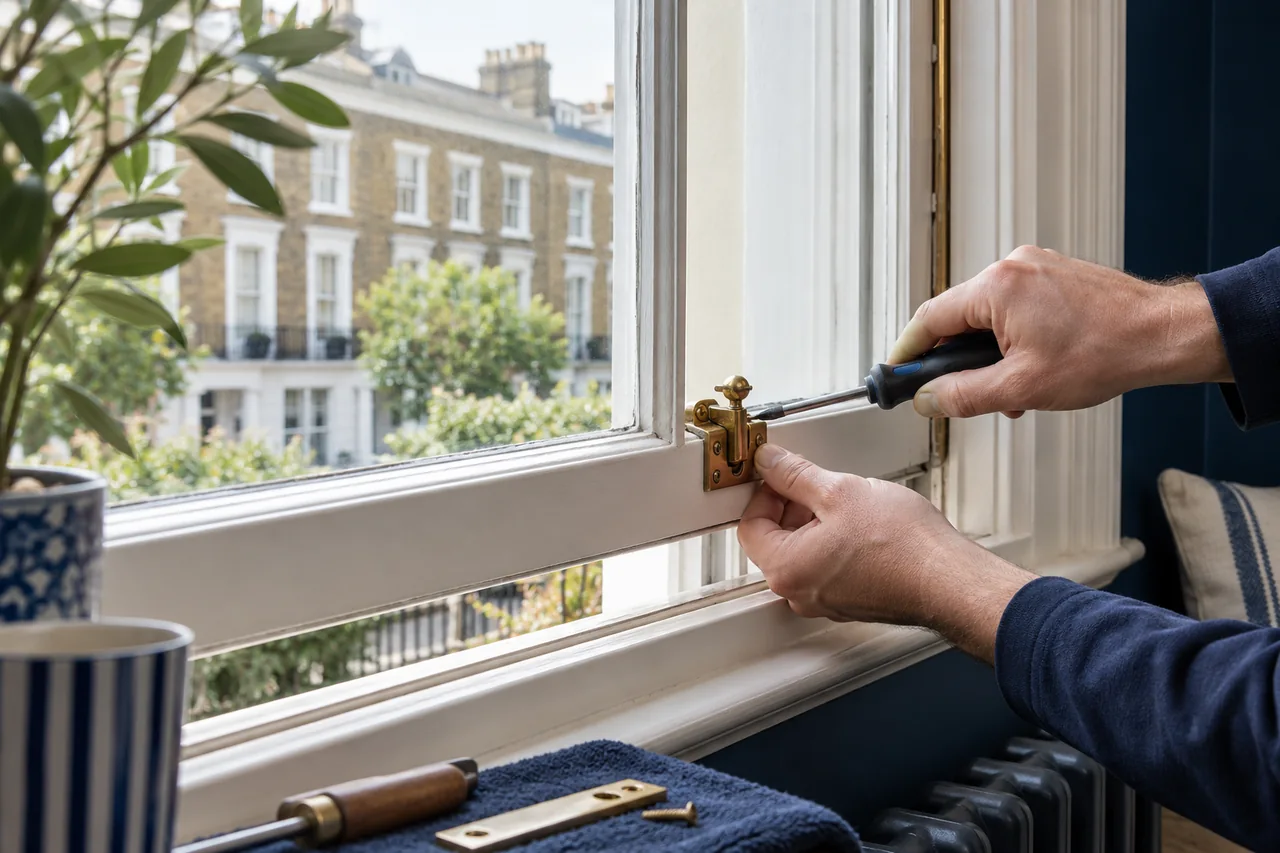
Internal doors, cupboard fronts, hinges and handles are common repair-list items. Mention whether the fitting is decorative, part of a security arrangement or on a fire door. Those distinctions affect the specification and appropriate trade. A general adjustment should not compromise a fire or communal door. For more involved timber work, use the carpentry service to discuss replacement sections, a new door or fitted storage. Bring the existing dimensions and finish details to that conversation.
Wall-mounted fittings need a sound base and appropriate fixings for their load. A loose shelf can involve the wall, bracket or shelf itself. State what it carries and whether it has moved or cracked the surrounding surface. Pipes and cables may be concealed near the intended position, so do not pre-drill holes in an attempt to save time. The work should be planned around the substrate and intended use rather than assuming every wall accepts the same fixing.

| Repair | Details worth recording |
|---|---|
| Door catches | Position of rubbing, hinge movement and floor clearance. |
| Cupboard front drops | Hinge type, damaged fixing holes and previous repairs. |
| Loose wall fitting | Wall material, intended load and movement. |
| Mixed repair list | Essential items, separate trades and required parts. |
A repair list can combine sensible tasks
Several small faults may be addressed as one planned visit when they suit the same trade and the necessary parts are available. List essential jobs first, with optional items separately. Group them by room and identify any task that needs a second person, unusual equipment or tall access. A count of items does not predict how long they will take. Two hinges with damaged timber can require more work than several straightforward adjustments.
For new installations and assembly rather than fault repairs, odd jobs may be the clearer starting point. If your list mixes trades, explain that up front so the appointment can be arranged appropriately. A small leaking fitting belongs in the plumbing enquiry, while electrical or gas faults require their own competent trade. Combining the telephone discussion is useful; it does not turn specialist work into a general handyman task.

Plan time, parts and the finish around the repair
For general handyman planning, the daytime labour guide starts from £91 for the first hour Monday–Saturday, with £39 for each additional half-hour and a one-hour minimum. Sunday daytime rates differ. The homepage calculator explains the conditions and lets you plan time and extras. These rates do not set a fixed price for every fault or cover specialist work. The actual job, parts and access still need discussion before booking.
Prepare by clearing the immediate area, identifying the authorised contact and keeping product details together. In flats, explain parking, lifts and working-hour restrictions. Ask whether materials, collection, removal and making good are included. After the repair, check the item's operation and understand any limits before normal use resumes. If paint or filler needs drying time, follow the handover advice. Call 020 3078 5925 with the fault and priorities to plan work around what the home actually needs.
Urgent problems need a realistic next step
An urgent household fault needs a clear description, an appropriate trade and a realistic attendance arrangement. Call to explain the situation and check current arrangements. Say if a door cannot secure the property, water is escaping or an item is unstable. Immediate danger calls for the relevant emergency route. Do not keep using a failing fitting or attempt an unsafe temporary repair while waiting for a routine appointment.
For a security or lockout fault, describe it specifically to the locksmith service. If water is near electrical equipment, keep clear. An urgent enquiry still needs a scope, an agreed price basis and the right trade. A temporary measure may reduce immediate disruption without being the final repair; ask what it achieves and what follow-up is needed. Keep the distinction clear so a short-term action is not mistaken for completion of the whole job.
Questions about handyman repairs
Details worth agreeing for handyman repairs.
Can you tell how long a repair takes from the task name?
Not reliably. Condition, access and available parts can change the work substantially. Describe the fault and provide context. The calculator uses your planned duration; it does not pretend to predict labour from a list of task names.
Can you bring a replacement part?
Discuss the item and any manufacturer details beforehand. Some common parts may be straightforward to obtain, while unusual hinges or fittings need identifying. Confirm supply and collection arrangements rather than assuming every component will be available on arrival.
Is making good included after a repair?
Agree it explicitly. Tightening or replacing a fitting is different from restoring damaged plaster, filling old holes or repainting a wider area. The repair scope should state the finish and any work left for another trade.
Can urgent repairs be attended immediately?
Call to check current availability and explain the situation. Confirm the actual attendance arrangement directly when calling. Immediate danger should be handled through the appropriate emergency route rather than waiting for a normal maintenance appointment.
Can several rooms be included in one visit?
Yes, a prioritised list helps the discussion, provided the tasks suit the trade and available time. Put essential work first and identify specialist items. The number of rooms or tasks alone does not establish how long the visit will take.
What if the repair exposes a bigger fault?
Ask for the finding and options to be explained before extra work is approved. A hidden damaged base or unavailable component may change the scope. Agree who can authorise changes, especially where a tenant or managing agent is involved.
Discuss handyman repairs.
Call with your postcode, the work you have in mind and any product or access details.