
Menu
Home repairs & services
LONDON HOMES · THE PRACTICAL LIST
Odd Jobs and Furniture Assembly London
The flat-pack is still boxed, the pictures are leaning against a wall and the curtain pole has never quite reached the top of the list. Odd jobs are often small installations that need a clear plan and the right fixings rather than a full refurbishment. My Handyman handles these everyday household enquiries in London. Put the items into one list, describe the products and tell us what the finished arrangement should do for the room.

Make the list specific enough to prepare
Write down the item, room and intended position. For a shelf, include its length and what it will carry; for a curtain pole, include the window width and curtain weight. A photograph of the area helps show obstructions and nearby fittings. Separate assembly from wall mounting, because a cabinet that is built on the floor may still need securing according to its instructions. Mention anything already damaged, incomplete or previously fitted incorrectly.
Keep essential tasks separate from the jobs that can wait. This makes a planned visit easier to discuss without assuming every item can be finished within an arbitrary time. Small does not always mean quick: unfamiliar hardware, missing components and unsuitable wall surfaces can add work. If a fitting has failed and needs diagnosis, describe it through the handyman repairs service. Keep new assembly and installations identifiable so the products, fixings and final positions can be prepared.
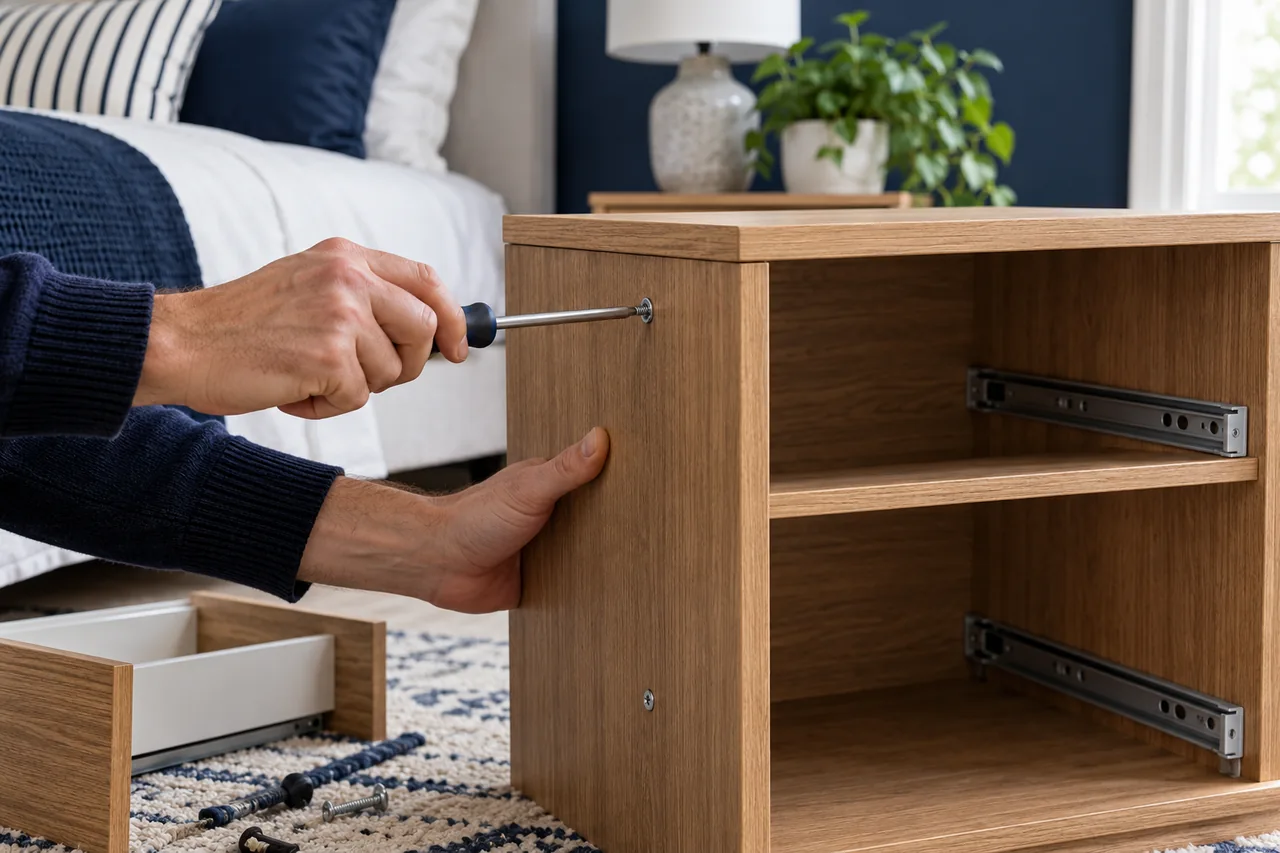
Flat-pack assembly starts before opening the tools
Provide the manufacturer, model and number of items. Large wardrobes, beds and storage units can need significant working space or more than one person. Check that all boxes have arrived and keep instructions and hardware together. Explain the room where the furniture will stand and whether there is space to lay components out without blocking access. A boxed item that fits through the entrance may become too large to move once assembled elsewhere.
Decide the final position before construction, particularly for furniture that needs anchoring. The manufacturer's instructions should determine the assembly and any securing requirements. Wall suitability still needs checking for those fixings. Do not substitute missing parts simply because another screw looks close in size. If a component is damaged, photograph it and contact the supplier as appropriate. The appointment should not depend on building around an unknown defect that could affect the finished item's stability or use.

| Job | What to have ready |
|---|---|
| Flat-pack furniture | Model, all boxes, instructions and assembly space. |
| Shelves | Dimensions, intended load and wall information. |
| Pictures or mirrors | Weight, hanging fittings and preferred arrangement. |
| Poles or blinds | Product instructions, opening size and bracket positions. |
Shelves, pictures and wall-mounted household items
The weight of the item and its contents determines more than the bracket style. Masonry, plasterboard, lath and plaster and other constructions require appropriate assessment. State if the wall type is unknown and show the whole area. Concealed services may affect drilling positions. A shelf should be planned for its actual load, while a heavy mirror may need a different fitting arrangement from a small picture. Buying a packet labelled universal does not settle those questions.
Mark a preferred position if useful, but leave final fixing decisions to the assessment. For multiple frames, prepare a paper layout or measurements so spacing can be discussed before holes are made. Think about furniture heights, door swing and access to switches. For made-to-measure shelves or timber alterations beyond a supplied kit, discuss carpentry. That separates product fitting from creating a new item, with the material and finish decisions that bespoke work requires.

Plan the visit around access and a realistic duration
The general handyman daytime guide starts from £91 for the first hour Monday–Saturday, then £39 per extra half-hour, with a one-hour minimum. Sunday rates and time-block conditions differ. Use the homepage planner to build a list, choose your own planned duration and add allowances. Task counts are not automatic time estimates. Materials, collection and access costs need discussion, and specialist work is outside that general rate calculation.
Clear the work area and agree arrangements for packaging and removed items. Explain stairs, parking and restricted working hours before the appointment. At the end, check doors, drawers, positioning and any supplied restraints or safety components. Keep assembly instructions and spare hardware for later adjustments. Electrical, gas, structural and specialist security work should be identified separately rather than added as an unnamed small job. Call 020 3078 5925 with the list and product details so the work can be organised sensibly.
Curtain poles, blinds and the details around windows
Give the pole or blind model, width and installation instructions. Recess fitting, face fitting and ceiling fixing can involve different substrates and clearances. Check the position of handles, radiators and opening windows. Heavy curtains place a different demand on the support from a light roller blind. Mention old fixing holes and whether previous brackets have pulled away. The condition of the base should be considered before choosing to reuse those positions.
For corded blinds or other products with specific safety components, retain the supplied instructions and accessories. The installation should follow the product requirements rather than omitting a fitting because it appears visually inconvenient. Agree whether removed brackets, damaged holes and paint touch-ups are included. If wider finishing is needed, coordinate painting and decorating so filled areas are properly prepared. A neat fitting can still leave visible marks from the old arrangement unless making good is planned.
Questions about odd jobs and furniture assembly
Details worth agreeing for odd jobs and furniture assembly.
Can you assemble several items in one appointment?
Provide the exact models and quantity so the work can be discussed. Large or complex items can take longer and may need additional handling. Set priorities rather than assuming the same duration for every flat-pack product.
Should I unpack the furniture first?
Check delivery completeness and follow any supplier handling guidance. Keep hardware and instructions together and protect components from damage. Discuss available assembly space; it can be useful to leave packaging intact until the work area is ready.
Will you fit the wall restraints supplied with a wardrobe?
Identify those requirements before the visit. The manufacturer's instructions and the wall condition determine the suitable arrangement. Assembly and securing should be considered together, rather than treating restraints as an optional decorative accessory.
Can a heavy mirror go on plasterboard?
The wall construction, support, mirror weight and fixing arrangement need assessing. Do not assume it is suitable or impossible based solely on the word plasterboard. Give dimensions and product details before buying fixings or drilling.
Does fitting a new blind include removing the old one?
Confirm removal and making good in the list. Old brackets can leave holes or damaged paint, and the new fitting may occupy a different position. Agree what finish is included so the surrounding wall is not overlooked.
Can I add electrical work to the odd-jobs list?
Mention it separately when calling so the correct trade and scope can be arranged. Electrical work should not be treated as an ordinary assembly task, and it is not priced by the general handyman calculator merely because it appears small.
Discuss odd jobs and furniture assembly.
Call with your postcode, the work you have in mind and any product or access details.